
Introduction
Installing the Metal Roofing On A Shed is one of the useful skills that may save you money and enhance greatly the longevity of your outside building. Metal roofing has gained popularity as a shed material owing to its strength, durability and ability to withstand extreme weather conditions. Metal panels are a sure thing whether you need to construct a new shed or to renovate an old roof.
Even unprofessional people can finish this project with the appropriate tools, materials, and approach. The step-by-step process would enable you to have a secure installation to safeguard your shed in the coming years.
Metal Roofing Advantages on Sheds
Before commencing the installation process, why not know the reasons why metal roofing is a great choice. Durability is one of the largest benefits. With minimal wear or damage, metal roofs can last decades.
They can also withstand rain, snow and high winds and thus are best suited to outdoor structures. Metal panels do not crack or wear out easily as compared to the traditional shingles.
The other advantage is low maintenance. Metal roofing needs little maintenance after installation. It also reflects heat and this can be used to control the temperature in the shed.
Moreover, metal roofing is lightweight relative to certain material, and therefore, it is easy to handle during installation.
Materials and Tools You will require
It is easier when you have the right tools and materials when you are ready to start. The typical equipment is a measuring tape, drill, metal snips, hammer and safety equipment like gloves and goggles.
You will also require roofing screws that have rubber washers, metal panels, underlayment and edge and joint flashing. The peak of the roof is covered with ridges caps.
Your shed roof should be measured in order to know the number of panels that you require. Purchasing a little extra material than needed may serve as a way of taking into consideration errors or changes.
It is important to prepare, and hence planning all the things beforehand will prevent delays at the time of installation.
Surfacing the Shed Roof
With a good preparation the metal roofing will fit in place and serve well in the long run. Begin by scraping off any old roofing material or nails and debris on the surface.
Check the roof structure whether it is damaged. Before going any further, replace any weak or rotting wood. An effective installation must be based on a solid foundation.
Then, add an underlayment layer. This serves as a water shield, and as an extra line of defense against leaks. Install evenly the underlayment on the roof surface.
Ensure the surface is dry, clean and even before the metal panels are laid.
Step-by-Step Installation Process
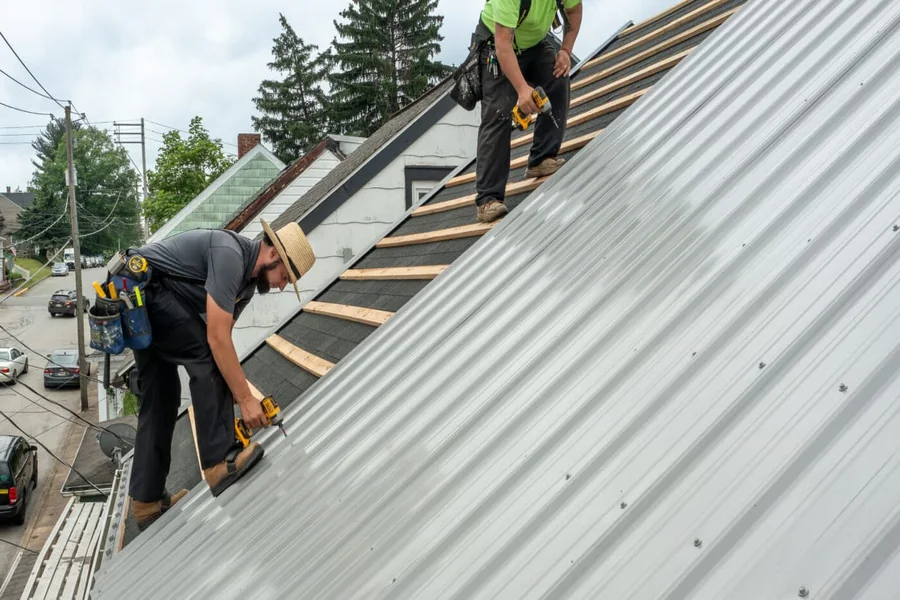
Start with the first metal panel at one of the corner of the roof. Make sure that it is perfectly aligned to make sure that it sticks out a little along the edges to allow it to drain.
Fix the panel with roofing screws, fitting them in the suggested positions, which are normally the ridges in the panel. Do not over-tighten, this may cause harm to the material.
Keep adding panels until you have the desired number of panels attached to each other as per the instructions of the manufacturer. This overlap does not allow water to leak through the joints.
After the installation of all panels, join flashing on the edges to close the gaps and prevent entry of water. Fit the ridge cap on the very top of the roof to complete the structure.
Be patient and make sure that all parts are well positioned and fastened to achieve maximum outcome.
Mistakes to Commonly Avoid
The wrong alignment of panels is one of the mistakes. Even a minor misalignment during the beginning may cause bigger problems as you proceed to install it.
The other problem is the wrong screws or the wrong position of the screws. This may undermine the stability of the roof to remain secure and waterproof.
This is also a mistake of skipping the underlayment. In its absence, your shed will be prone to wetness and leaks.
Also, failure to permit an adequate overlap between panels may cause water to enter. These issues can be prevented by adhering to the guidelines.
Following the process to the letter will guarantee a quality and sound roof.
Care Techniques to have a lasting performance
Once it is installed, it is not difficult to maintain your metal roof. Periodically inspect screws and debris that can build up on the surface.
Occasional cleaning of the roof prevents its build up that might lead to impaired performance. Checking the corners and intersections is necessary to make sure that the flashing is well-locked.
In the event that you see any damage, it can be fixed at an early stage to avoid bigger problems in the future. Metal roof can take years without significant repairs with the appropriate care.
Maintaining your roof is one way of having your shed safe in any weather.
Final Thought
The task of learning on how to install metal roofing on a shed is an important project with both short-term and long-term benefits. By being well prepared, using the correct materials and being very keen in details, you can have a professional look of your work.
Metal roofing is durable, requires low maintenance and provides good protection making it a good choice in all sizes of sheds. The time to install it correctly will guarantee you that your investment will be spent over the years.
FAQs
How to install metal roofing on a shed for beginners?
Start by preparing the roof surface, adding underlayment, and then installing metal panels step by step with proper alignment and screws.
Do I need underlayment for a metal shed roof?
Yes, underlayment provides extra protection against moisture and helps prevent leaks.
What tools are required for installation?
Basic tools include a drill, measuring tape, metal snips, and safety equipment.
How long does a metal shed roof last?
A properly installed metal roof can last several decades with minimal maintenance.
Can I install metal roofing by myself?
Yes, it is possible with basic skills and careful planning, especially for small sheds.
What is the most common mistake during installation?
Improper alignment and incorrect screw placement are common mistakes that can affect the roof’s performance.
