

Introduction
How To Get Slime Out Couch is a dilemma that most individuals encounter, particularly those in homes having children. Slime is also fun to play with, but once it gets stuck to your couch, it becomes a sticky mess. Its paste-like consistency allows it to stick firmly to the fabric and when untreated, it can leak further into the cushions.
The positive side of it all is that slime stains can be fixed, provided that they are treated. Having the correct methods and a good amount of patience, you can both clean up the residue and any stains without ruining your couch. It will be easier to do so by acting on time and employing safe cleaning techniques.
The reason why Slime is difficult to clean off Upholstery
Slime is usually created using glue, water and activating substances such as borax or contact solution. This compound makes it sticky and elastic in nature, which easily sticks to fabric fibers.
Slime can become hardened when it is left on a couch too long and thus becomes even more difficult to remove. Meanwhile, colored slime may leave dyes that will stain the fabric.
Its spreading is another challenge. Slime can be pressed or rubbed into the upholstery, making it harder to clean up. This is why it needs to be dealt with carefully at the beginning.
Initial Action to eliminate Fresh Slime
When the slime is fresh, begin to remove it, taking care not to spread it. Gently pick it up off the surface with a spoon or dull knife. Do not press it into the cloth.
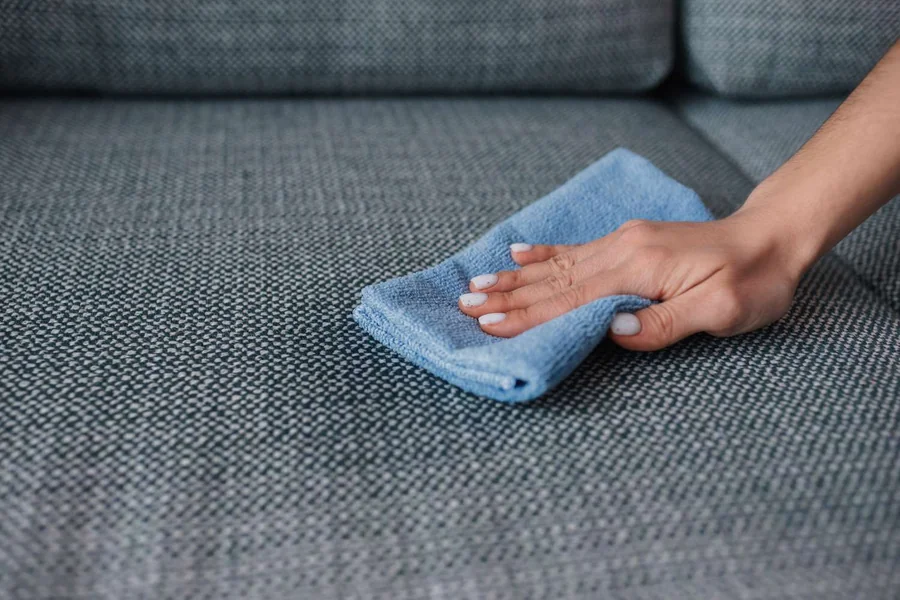
After the superfluous slime is eliminated, wipe the place using a clean cloth to remove any leftover slime. Do not rub, this may only make things worse.
Then pour a little warm water into the leftover slime in order to loosen it. This enables the material to be softened and easily washed. Blot until the majority of the residue has been removed.
You might see a spot on the slime (in case there is some color in it). Cleaning solutions can be used in the following steps to treat this.
Good Home Remedies To get rid of Slime
Household products can be extremely helpful in dissolving slime residue.
One of the best is white vinegar. Put it directly on the affected area and leave it a few minutes. The vinegar will assist in dissolving the slime, and it is easier to wipe. Wipe down with a towel.
Another sure way is to use dish soap in warm water. It assists in dissolving any sticky residue, and removes any residual slime particles. Spot the solution on the area and dry off.
To loosen sticky residues, baking soda can be applied. Spray it on the wet surface and rub it off with a soft brush and then wiping it off.
Slime can also be dissolved with rubbing alcohol, particularly when it comes to more stubborn areas. Use little and blot. Always practice on an unseen part.
Deep removal of Dried or Stubborn Slime
When the slime is dry, begin to scrape it off with a bit of care as much as you can remove. Do not tear the cloth.
Use vinegar or rubbing alcohol to soften the left residue. Allow to rest several minutes, blot on clean cloth.
Do it again until the slime has been removed completely. To treat difficult stains, several treatments might be necessary.
It can be used with an upholstery cleaner or wet vacuum to get any remaining residue out of deep inside the couch. This will give a good clean.
In case the cushion covers can be removed, it can also be washed separately to cleanse any leftover traces.
Washing Various Couch Covers
The cleaning methods of different couch materials are different.
Couches made of fabric are mostly more readily cleaned using water-based solution. You will only have to make sure you do not over-saturate the fabric.
Couches made of microfibers require little humidity. Clean with a small quantity of cleaning solution and blot.
Extra care should be taken of leather couches. Wipe slime off with a damp cloth, and then wipe with a leather-safe cleaner. Use no intense chemicals that may destroy the surface.
It is always important to observe the label on the care of your couch before using any cleaning technique.
Avoiding Future Slime Incidents
The first step would be to prevent slime on your couch and save time and efforts.
Play with slime should be encouraged in kids in open spaces not near furniture. The mess can be contained using a table or mat.
Cover your couch with washable covers or throws. These are easily washable in case of slime inadvertently falling on them.
Having cleaning supplies at hand will enable you to be fast in the event of an accident. The quicker your reaction the more slime you can get off.
Cleaning and taking care of your couch regularly also prevents the accumulation and makes it easier to remove stains.
Final Thought
It might appear that it is difficult to remove slime on a couch, however, it can be fully handled with the correct procedures. The secrets to success lie in acting fast, relying on effective household solutions, and cleaning delicately. The slime is fresh or dried, be it on your couch, patience and proper treatment will make your couch beautiful again. You can also stop future messes and even have your furniture looking clean with some preventive measures.
FAQs
What is the easiest way to remove slime from a couch?
Gently scrape off excess slime, then use vinegar or dish soap solution to dissolve and clean the residue.
Can vinegar damage couch fabric?
Vinegar is generally safe but should always be tested on a hidden area first.
How do I remove dried slime from upholstery?
Scrape off the dried slime, soften the residue with a cleaning solution, and blot it away.
Does baking soda remove slime stains?
Baking soda can help lift residue and reduce stains when used with water.
Can I use hot water to clean slime?
Warm water is safe, but very hot water should be avoided as it may set stains.
Will slime leave a permanent stain on my couch?
If treated quickly and properly, most slime stains can be removed without leaving marks.
