

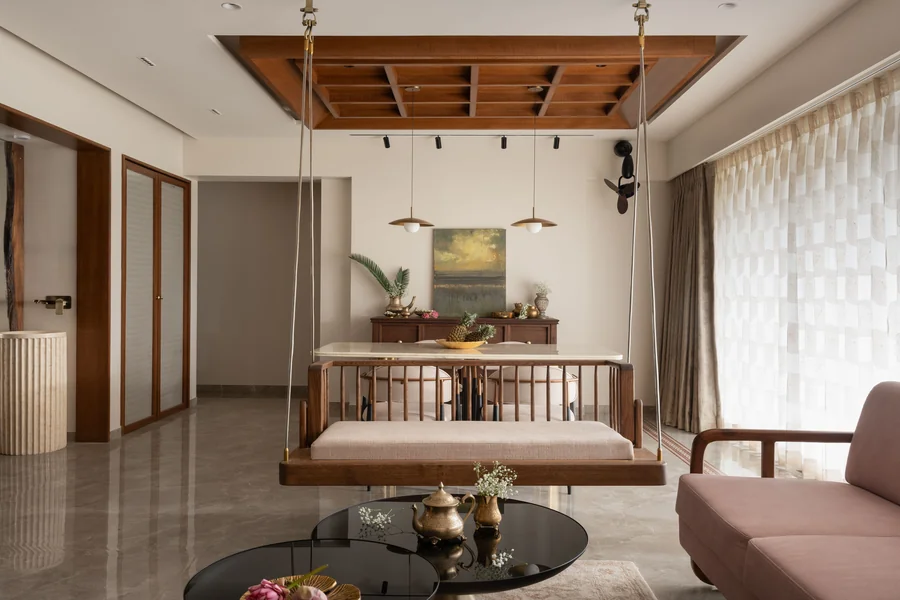
Interior decor is often presented as a search for a finished result—a perfectly styled room, a matching palette, a layout that looks complete. But real homes rarely stay finished. They shift with routines, weather, habits, and the people living inside them. The most interesting interiors are not static compositions; they are adaptable environments that change without losing their identity.
Designing with that in mind means moving away from perfection and toward longevity. A room should not only look good at one moment in time—it should continue to work, age well, and allow for small changes without falling apart visually.
Starting with Use, Not Aesthetics
Before thinking about style, it helps to understand function in detail. What actually happens in the space from morning to night?
A living room might host quiet coffee mornings, work calls, evening rest, and occasional gatherings. A bedroom might need to shift between sleep, storage, and reading. A dining area might double as a workspace.
When decor is built around use, decisions become clearer. Furniture stops being chosen only for appearance and starts being evaluated for how it supports daily life. A visually impressive chair that is uncomfortable will eventually be avoided. A simple piece that fits the body and the routine will quietly become essential.
This is where long-term satisfaction in interior design begins—not in the showroom, but in lived experience.
Layout as a Daily Path, Not a Floor Plan
A floor plan looks at space from above. Living in it is entirely different.
Good layouts are shaped by movement. People naturally create paths through rooms, and furniture either supports or interrupts those paths. When movement is smooth, a room feels intuitive. When it is blocked, even a beautiful space feels frustrating.
Instead of centering everything around symmetry or focal points, it is often better to think in terms of zones:
- A resting zone for relaxation
- A functional zone for work or activity
- A transition zone that connects movement
When these zones are clearly defined but not rigid, the room feels organized without being restrictive. This balance is what allows interiors to stay usable as needs change.
Materials That Age Instead of Decay
One of the most overlooked aspects of interior decor is how materials behave over time. Some surfaces deteriorate in ways that feel worn out, while others develop character.
Natural wood, stone, linen, and metals often improve visually with age. They develop patina, softness, or slight variation that makes them more interesting. Synthetic materials can sometimes resist wear, but when they do change, it is often in less forgiving ways.
Choosing materials with aging in mind is not about avoiding maintenance—it is about accepting change as part of the design.
Even fabric choices matter here. Upholstery, for example, can either define or limit a room’s longevity. In high-use spaces, protective layers like washable covers can make a significant difference. In fact, using chair slipcovers can extend the life of seating while allowing seasonal or stylistic updates without replacing furniture entirely.
That flexibility is often more valuable than buying new pieces every time tastes shift.
Texture as Emotional Structure
Texture plays a role that is often underestimated. While color sets mood, texture defines how a room feels physically and visually.
A space with only smooth, uniform surfaces can feel sterile. A space with too many rough or heavy textures can feel overwhelming. The most comfortable interiors usually combine contrast:
- Soft textiles against structured furniture
- Matte finishes against subtle shine
- Natural irregularities alongside clean lines
This variation creates depth without clutter. It also allows the eye to rest and move naturally through the space.
Texture is also closely tied to comfort. Softness signals relaxation. Firm, structured materials signal stability. A well-designed room often uses both in balance.
Objects as Memory Anchors
Furniture and decor items are not just functional or decorative—they often act as memory anchors. A table might remind someone of shared meals. A rug might connect to a specific place or time. Even small objects can hold emotional continuity in a home.
This is why overly curated spaces sometimes feel impersonal. When everything is replaced or standardized, the room loses its story.
Allowing objects to accumulate meaning over time makes a space feel lived in. It also reduces the pressure to constantly update interiors just to keep them “fresh.”
A strong interior does not erase its past. It layers it.
Light That Changes the Room Instead of Filling It
Lighting is not just about visibility—it is about shaping perception.
Natural light shifts throughout the day, and interiors respond to it. Morning light tends to reveal detail, while evening light softens edges and reduces contrast. A well-designed space does not fight these changes; it works with them.
Artificial lighting should support this rhythm rather than override it. Instead of relying on a single bright source, layered lighting creates flexibility:
- Ambient lighting for general use
- Task lighting for focused activity
- Accent lighting for atmosphere
When these layers are combined thoughtfully, the same room can feel completely different depending on the time of day and purpose.
Color as a Background Language
Color is often treated as the main visual decision in interior decor, but it is more effective when treated as a background system.
Rather than dominating a room, color should support it. Neutral tones often provide stability, allowing furniture and objects to stand out naturally. Deeper colors can create intimacy when used selectively, especially in areas meant for rest or focus.
Accent colors work best when they are limited and intentional. A single bold tone used in small areas can be more effective than multiple competing shades.
The goal is not visual noise, but emotional clarity.
Practical Beauty: When Function Becomes Design
Some of the most successful design choices are not immediately noticeable because they are practical first.
Storage that blends into walls, furniture that serves multiple purposes, and fabrics that resist wear all contribute to a room’s long-term success. These elements reduce friction in daily life.
For example, washable textiles, modular shelving, and adaptable seating all make it easier for a room to stay functional without constant redesign.
Good decor is often invisible in its usefulness.
Personalization Without Overcrowding
A common challenge in interior design is balancing personality with simplicity. Too many personal items can create visual clutter, while too few can make a space feel empty.
The solution is selective storytelling. Instead of displaying everything, choose a few meaningful pieces that represent different aspects of life:
- One or two travel objects
- A few framed images or artworks
- A small collection of functional items with personal value
This approach keeps the space expressive without overwhelming it.
A Home That Evolves With You
The most sustainable approach to interior decor is accepting that change is inevitable. Instead of designing a space that resists change, it is better to design one that accommodates it.
Furniture can be rearranged. Textiles can be updated. Objects can rotate in and out. Even lighting can be adjusted over time.
A home that evolves does not lose its identity—it strengthens it. Each adjustment becomes part of its ongoing story rather than a reset.
Final Thought: Design as Continuity, Not Completion
Interior decor is often framed as a goal to be achieved. In practice, it is closer to an ongoing conversation between space and life.
Rooms are not finished products. They are systems that respond, adapt, and accumulate meaning. When design choices support that idea—through flexible layouts, durable materials, layered lighting, and personal objects—the result is not just a beautiful interior, but a livable one that continues to make sense over time.
