

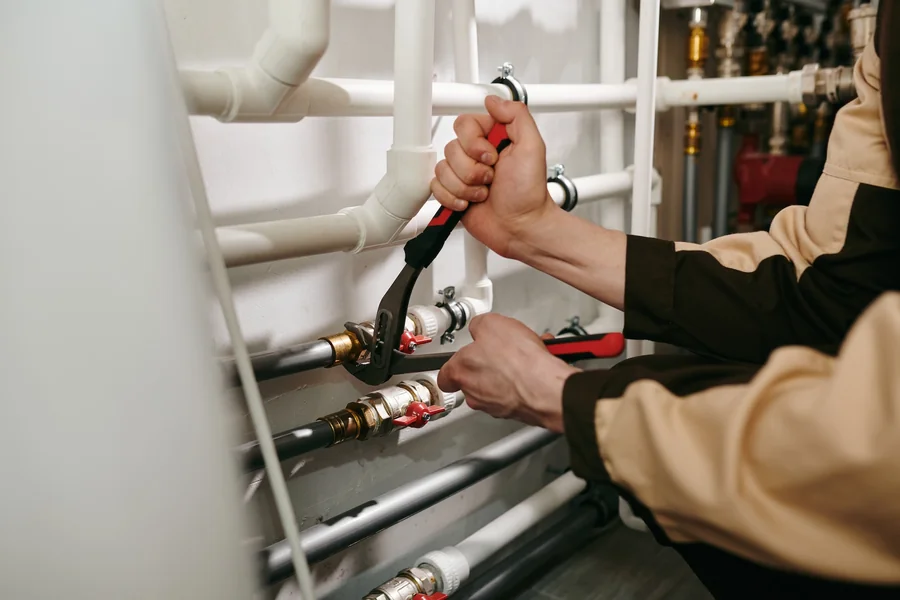
Intermittent water pressure is easy to dismiss when it disappears before anyone arrives to inspect it. That is exactly why it turns into a recurring operational problem. A fixture runs weak in the morning, normal at noon, then barely usable again by evening, leaving managers with complaints but no obvious failure in sight.
For property managers, facility teams, and building owners, inconsistent pressure is not just an inconvenience. It affects tenant satisfaction, cleaning efficiency, kitchen operations, restroom performance, and confidence in the plumbing system itself. Plumbers diagnose this kind of problem by tracking when the drop occurs, where it appears, and which system conditions change at the same time. The issue is rarely random, and the pattern usually points to the cause.
Looking Past The Obvious Complaint
-
Timing Reveals What Static Checks Miss
When water pressure comes and goes, the first diagnostic step is not replacing parts. It is identifying the pattern. A plumber wants to know whether the pressure drop happens during peak occupancy, after irrigation starts, when a water heater is active, or only at certain fixtures. Those details matter because intermittent plumbing issues are often tied to demand, control settings, or shared system loads rather than a constant blockage.
Pressure that falls only during high-use periods may point to undersized piping, failing pressure regulation, partially restricted lines, or competing demand from multiple fixtures and appliances. Pressure that fluctuates at random times can indicate a valve problem, sediment movement, an inconsistent water supply, or an issue with pumps or boosters. The key is understanding whether the system fails under stress or shifts without warning.
-
Where Pressure Loss Actually Starts
A reliable diagnosis begins by separating symptoms from the source. A tenant may report weak pressure at a sink, but the real problem may start upstream in the branch line, pressure-reducing valve, meter assembly, or building supply. That distinction matters because fixture-level complaints often lead people to chase the wrong repair. In larger buildings, one visible issue can be the endpoint of a broader system imbalance.
That is why a practical service team documents pressure behavior across the property before recommending a fix. In the same way some facility managers coordinate multiple trades, a contractor familiar with Duncan Air conditioning repair service standards often understands how building systems must be evaluated by pattern rather than assumption. Plumbing pressure problems demand the same discipline. The issue has to be traced from the point of complaint back through the system, whose conditions change throughout the day.
-
Fixture Location Changes: The Diagnosis
Not all intermittent pressure problems affect an entire property. Sometimes the issue is limited to upper floors, end-of-line fixtures, isolated restrooms, or one tenant suite. That location data helps a plumber quickly narrow down the cause. If pressure drops only on upper levels, the problem may involve elevation loss, a weak booster system, or insufficient regulation under load. If only one wing is affected, the focus shifts to local shutoff valves, branch-line restrictions, or corrosion in older piping.
This is where comparison testing becomes valuable. A plumber may check pressure at multiple fixtures while the building is under different demand conditions. If the pressure drop occurs only in one zone, the problem is less likely to be tied to the municipal supply and more likely to be within the property. If the whole building shows the same decline, the diagnosis expands to incoming pressure, regulators, pumps, and service line conditions.
-
Pressure Regulators Often Fail Gradually
A pressure-reducing valve is one of the most common causes of inconsistent water pressure in commercial and multi-unit properties. These valves do not always fail in a dramatic, obvious way. They can stick, respond slowly, or lose control only under changing demand. That creates the kind of complaint building operators find most frustrating: sometimes normal, sometimes weak, rarely predictable.
A plumber evaluating intermittent pressure will often test pressure before and after the regulator under different flow conditions. If the downstream pressure swings too far as fixtures open and close, the valve may no longer control pressure properly. In older systems, mineral buildup and wear inside the regulator can produce unstable performance long before the valve stops working entirely. That is why pressure testing under real operating conditions matters more than a quick visual inspection.
Accurate Testing Prevents Repeat Problems
Water pressure problems that come and go are rarely solved by instinct alone. They need structured testing, timing analysis, and a clear understanding of how the plumbing system behaves under changing demand. That is why strong plumbers focus on pressure readings, flow behavior, fixture location, regulators, restrictions, pumps, and supply conditions before recommending a repair.
For building owners and property managers, that method matters because intermittent issues are the ones most likely to trigger repeat complaints and incomplete fixes. A plumbing system may look fine during a brief visit, yet still fail during the hours that matter most. When the diagnosis is based on current conditions rather than assumptions, repairs become more targeted, disruptions decrease, and pressure problems no longer return under a different name.
