

Introduction
How To Install Metal Roofing Over Plywood is a popular query among house owners, who want to give their roof a durable and long-lasting material. Metal roofing is reputed to be strong, economical in terms of energy usage and capable of withstanding any weather conditions hence it is very popular in residential and outdoor buildings.
The use of metal roofing on a plywood deck offers a strong base that holds the panels and offers them a correct alignment. This project has the ability to produce professional output with the correct preparation and technique and can greatly prolong the life of your roof.
Why is Plywood the Roofing Base?
Due to its strength and stability, plywood is one of the most popular roof decking materials. It provides a level surface that enables metal sheets to rest on and be effective.
An installed plywood base would evenly spread weight on the roof structure. It also offers a firm base with which the fasteners can be secured, meaning that the metal panels do not fly away in the strong winds.
When used with underlayment it is another advantageous factor in that it is moisture resistant. This is a combination that aids in shielding the building under the roof against water damages.
The plywood is used as a base to enhance the durability and functionality of the roofing system.
Materials and Tools You will require
It is worthwhile to prepare all the tools and materials before the commencement of the installation. A measuring tape, drill, screw gun, metal snips, chalk line, and safety equipment (gloves, eye protection, etc.) are common tools.
The materials usually consist of metal roofing panels, underlayment, roofing screws with rubber washers, and flashing, and ridge caps. It may also need sealant to make sure that it is watertight.
Getting all the preparations down will aid in a smoother process and minimizes delays during installation.
The roof area is to be measured accurately to ascertain the amount of material required.
Surface Preparation of Plywood
It is important that the plywood surface should be properly prepared. Begin by checking the plywood to determine whether it has been damaged, be it, rot, warped or loose. Before doing so, replace or repair any areas that are compromised.
Make sure that the surface is clean and clear of debris. The metal panels could be influenced by any dirt or unevenness in the way they are seated on the roof.
Install an underlayment on the plywood next. This layer is used to prevent leaks, and also serves as a moisture barrier.
Ensure the underlayment is well laid and well glued because this is the foundation of the metal roofing.
Step-by-Step Installation Process
Start by attaching the first metal panel to the roof edge. Install it properly, with a small over run to enable proper water drainage.
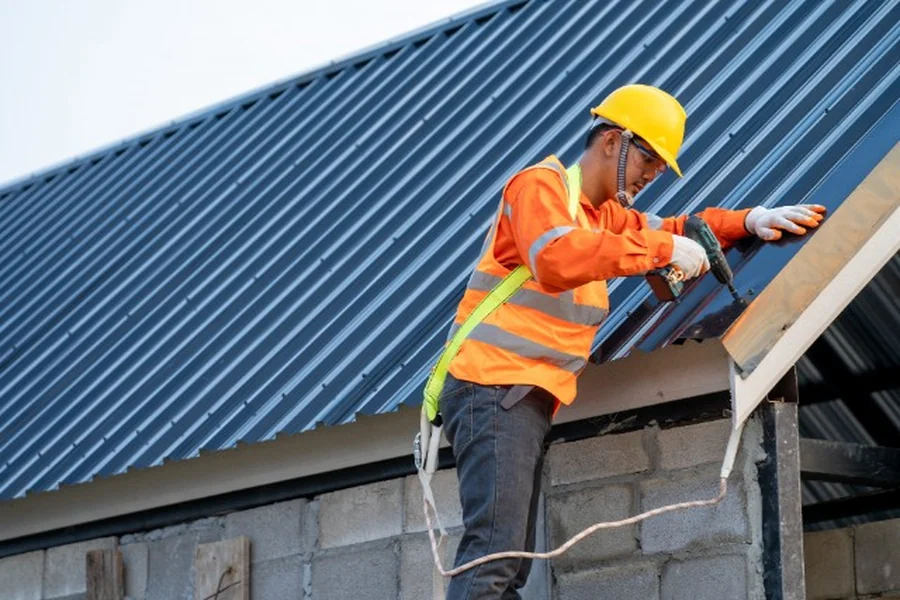
Attach the panel with roofing screws, and mount them in the appropriate positions, typically where the ridges are. Do not over tighten, this may destroy the panel or render it ineffective.
Keep on adding more panels, but cross over them as per the instructions of the manufacturer. This overlap is necessary to avoid water getting in between panels.
Draw a straight line with a piece of chalk to ensure that you move in a straight line on the roof. Regularity of positioning gives it a clean and professional look.
After installing all the panels, apply flashing at the edges and any exposed roof openings. Complete with the ridge cap at the top to close the roof.
You should take your time doing this so that you would have an enduring and weather-resistant product.
Usual Traps to Be Wary of
Among the errors that can be made are the inability to prepare the plywood surface correctly. Leaving repairs or cleaning may result in uneven installation and subsequent problems in future.
Another problem is poor placement of screws. Put in screws in the right places in order to have a good fit that is tight and waterproof.
Failure to ensure that there is appropriate panel overlap may lead to leakages. It is imperative to use the instructions that are provided by the manufacturer to avoid water infiltration.
The other error is the neglect of safety measures. When working on a roof, one should have the correct safety equipment and be careful when walking around.
These errors can be avoided, which will save time and expensive repairs in the future.
Maintenance Tips for Metal Roofing
Once installed, it is important to maintain your metal roof so that you can increase their life. Consistently checking up enables you to diagnose and fix minor problems before it escalates to major problems.
Keep the roof clean by removing debris such as leaves and branches. This avoids accumulation which may entrap moisture.
Periodically attached check screws and clamps to keep them in place. Tighten or replace them if necessary.
Check flashing and seals to make sure they are in good condition. With proper maintenance, your roof can be left to work many years well.
Final Thought
The project of learning the installation of metal roofing over plywood is worthwhile project and has long term advantages. Through proper preparation, the appropriate materials, and meticulous installation, it is possible to come up with a solid and sturdy roofing system.
Metal roofing provides durability, energy efficiency, and protection against the elements, making it a smart investment. With the best practices and regular maintenance of your roof, you can have a long lasting and quality outcome.
FAQs
How to install metal roofing over plywood correctly?
Prepare the plywood surface, add underlayment, and install metal panels with proper alignment and secure fastening.
Do I need underlayment over plywood?
Yes, underlayment provides additional moisture protection and helps prevent leaks.
What type of screws should I use?
Use roofing screws with rubber washers designed specifically for metal roofing.
Can I install metal roofing by myself?
Yes, with proper tools and safety precautions, it is possible for smaller projects.
How long does metal roofing last?
Metal roofs can last several decades with proper installation and maintenance.
What is the most common mistake during installation?
Improper panel alignment and incorrect screw placement are common mistakes.
